

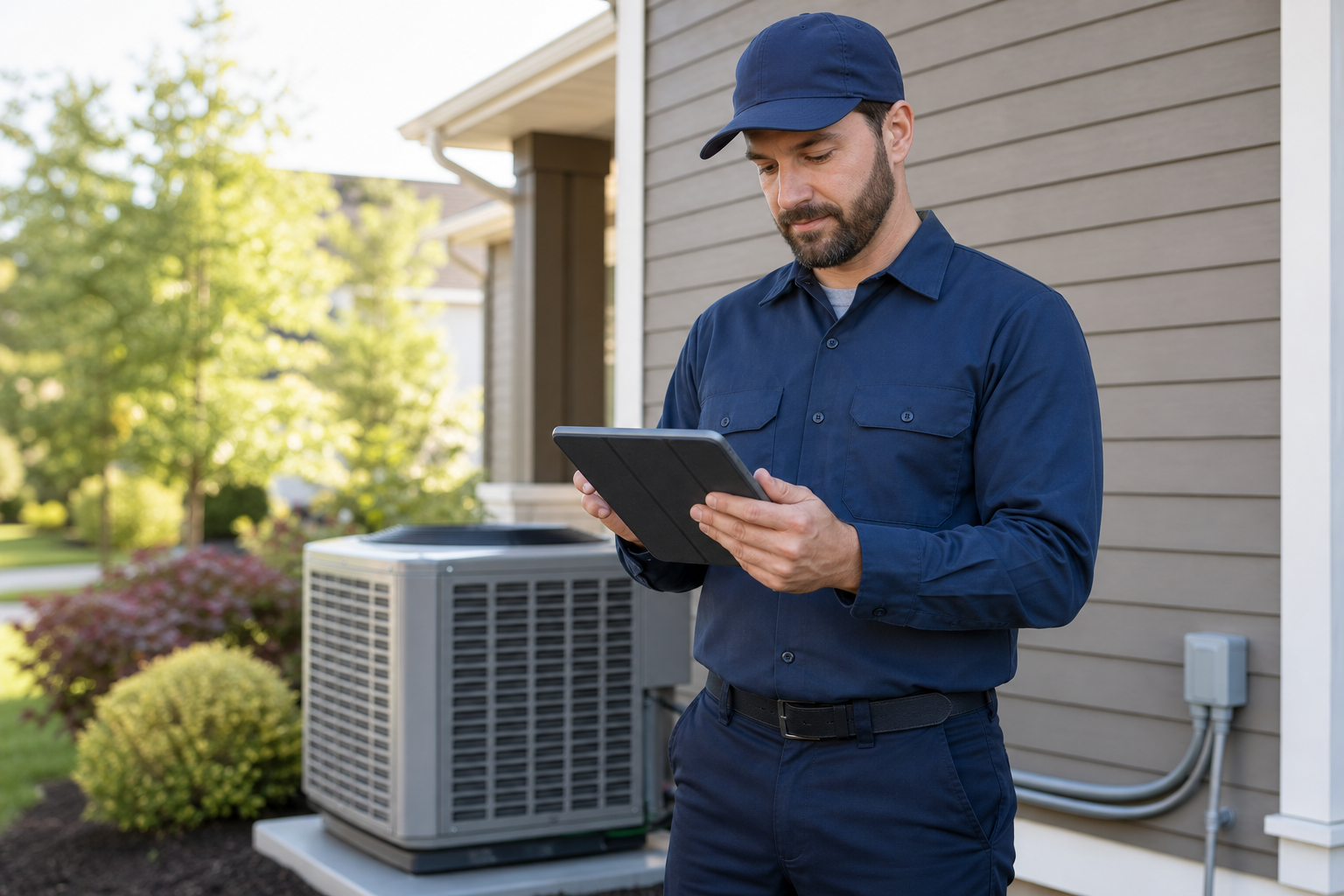
Most HVAC companies do not have a marketing problem. They have a connection problem. SEO runs on its own. Paid ads run on their own. Leads come in and sit in a voicemail box or an unread email for hours. Each piece may work in isolation, but the system as a whole leaks revenue at every handoff.
A real HVAC company marketing strategy is not about picking one channel and hoping it covers everything. It is about connecting SEO, paid ads, and lead follow-up so that each channel supports the others—and no lead falls through the cracks between them.
Why Channel Roles Matter More Than Channel Choice
Every marketing channel has a natural job. Problems start when you ask a channel to do something it was not built for.
SEO builds long-term visibility. It positions your company in front of homeowners and property managers who are researching solutions—comparing options, reading reviews, learning about equipment. These searchers may not need service today, but when they do, your name is already familiar.
Paid ads capture demand that already exists. Someone searches "AC repair near me" at 2 p.m. on a hot afternoon—they are not browsing. They need help now. Paid search puts your company at the top of that results page, right when urgency is highest.
Lead follow-up converts interest into booked jobs. Neither SEO nor paid ads close the deal. The phone call, the text reply, the estimate follow-up—that is where revenue actually happens.
When you understand each channel's role, you stop expecting your SEO campaign to generate same-day calls and stop expecting your Google Ads to build brand awareness on a limited budget. You let each tool do what it does best and build the connective tissue between them.
Connecting SEO to Paid Ads
SEO and paid search are not competing strategies. They cover different parts of the buyer journey and different timelines.
How they work together
SEO captures research-stage traffic. Blog posts about common HVAC problems, service pages explaining what to expect during an installation, and location pages targeting your service area all pull in people who are not ready to call yet—but will be.
Paid ads capture action-stage traffic. When someone needs emergency repair or is ready to schedule a replacement, paid search ads get your phone number in front of them immediately.
Data flows both ways. Your paid ad campaigns reveal which keywords convert at the highest rate. That data can inform which topics to prioritize in your SEO content. Meanwhile, your SEO analytics show which pages attract the most engaged visitors, helping you identify landing page angles for paid campaigns.
The practical connection point: if your paid ads consistently convert on "furnace replacement [city]" but your organic presence for that term is weak, you know exactly where to focus your next round of SEO work. And if organic traffic to a repair-focused page is strong but conversions are low, a paid remarketing campaign aimed at those visitors can recapture lost opportunities.
Service Intent vs. Install Intent
Not all HVAC leads are created equal, and your marketing strategy should reflect the difference between someone who needs a repair and someone considering a system replacement.
Service and repair intent tends to be urgent and local. These searchers use phrases like "AC not cooling," "furnace won't start," or "HVAC repair near me." They want fast answers, and the company that responds first often wins the job.
Installation and replacement intent involves a longer decision cycle. Homeowners researching a new system compare brands, read about efficiency ratings, and request multiple estimates. The sales process may take days or weeks.
Your marketing channels should address both, but differently:
For service/repair: Prioritize paid ads for high-intent local keywords. Make sure your call tracking and response systems can handle the speed these leads demand.
For install/replacement: Build SEO content that answers comparison questions and positions your company as knowledgeable. Use follow-up sequences to stay in front of prospects who requested an estimate but have not committed.
A strategy that treats all HVAC leads the same will underperform in both categories.
Seasonality and Channel Emphasis
HVAC demand is not flat across the year, and your marketing mix should shift accordingly. Without prescribing exact timing—since climate, geography, and your specific service mix all play a role—there are general patterns worth planning around.
During peak demand periods, paid ad competition intensifies and cost per click tends to rise. This is when a strong organic presence pays dividends, because your SEO content continues to drive traffic without incremental cost per visitor. If your regional SEO foundation is solid heading into a busy season, you can lean on it while managing ad spend more selectively.
During slower periods, ad costs may decrease, making paid campaigns more cost-effective for generating leads. This can also be a productive window for investing in SEO—publishing new content, optimizing existing pages, and building the visibility that will compound when demand returns.
The principle: plan channel emphasis around demand patterns rather than running everything at the same intensity year-round. That keeps your budget efficient and your pipeline steadier.
Lead Follow-Up: Where Revenue Is Won or Lost
Marketing can generate leads all day, but if your follow-up process is slow or inconsistent, you are paying for opportunities that go to a competitor.
The follow-up gap
Industry data consistently shows that speed to lead matters. The company that responds first to a service inquiry wins the job at a significantly higher rate than the second or third responder. For HVAC, where many calls are urgent, the window is especially tight.
Building a follow-up system
A complete HVAC company marketing strategy includes a defined follow-up process:
Immediate response. Whether a lead comes from a phone call, a web form, or a paid ad click-to-call, the response should be fast. Missed calls should trigger an automated text or callback workflow within minutes, not hours.
Estimate follow-up. A homeowner who received a replacement estimate but has not committed needs structured follow-up—one or two check-ins over the following week. This is not aggressive sales; it is simply staying present while they make a decision.
CRM hygiene. Every lead should be logged, tagged by source, and tracked through disposition. If you cannot tell which marketing channel produced a booked job, you cannot optimize your spend.
Reactivation. Past customers and unconverted estimates represent a warm audience. A quarterly check-in or seasonal maintenance reminder can reactivate relationships that might otherwise go dormant.
When follow-up is connected to your marketing channels, you can measure true ROI—not just leads generated, but jobs booked and revenue attributed.
Building the Connected System
Here is how the pieces fit together for a home service company running HVAC:
Top of funnel (awareness and research):
- SEO content targeting informational and comparison queries
- Local service pages optimized for your coverage area
- Google Business Profile kept current with accurate hours, services, and photos
Mid-funnel (consideration and conversion):
- Paid search campaigns targeting high-intent repair and replacement keywords
- Landing pages designed for fast conversion with clear calls to action
- Retargeting for visitors who researched but did not convert
Bottom of funnel (close and retain):
- Fast lead response via phone, text, or automated workflow
- Structured estimate follow-up sequences
- CRM tracking from lead source through booked job
- Customer reactivation campaigns for maintenance and future projects
Each layer feeds the next. SEO builds the audience. Paid ads capture the ready buyers. Follow-up converts the leads into revenue. And CRM data flows back up to inform where your marketing dollars are working hardest.
Common Mistakes in HVAC Marketing
Avoid these patterns that undermine otherwise solid strategies:
Running ads without tracking. If you cannot attribute a booked job back to a specific campaign, you are guessing about ROI.
Ignoring SEO during busy seasons. The best time to build organic visibility is before you need it. Pausing SEO when business is good means starting from a weaker position when demand slows.
Treating all leads the same. A repair call and a replacement inquiry need different response cadences and different follow-up approaches.
No defined follow-up process. Relying on memory or sticky notes to track estimates and callbacks is a system designed to lose revenue.
Frequently Asked Questions
How long does it take for SEO to produce results for an HVAC company?
SEO is a long-term investment. Most HVAC companies can expect to see meaningful organic traffic improvements within four to eight months of consistent, focused work—though timelines vary based on competition and the current state of your website.
Should I run Google Ads year-round for my HVAC business?
It depends on your market and budget. Many HVAC companies adjust ad spend seasonally, increasing it during peak demand and pulling back during slower months when organic traffic and referrals carry more of the load.
What is the most important part of an HVAC marketing strategy?
No single channel carries the entire strategy. If forced to pick a starting point, most companies benefit most from fixing their lead follow-up process first—because improving close rates on leads you already generate is the fastest path to more revenue.
How do I know if my marketing channels are actually connected?
Ask yourself: can you trace a customer from first website visit through booked job and attribute them to a specific channel? If not, there are gaps in your tracking and handoff process that need attention.
Put Your HVAC Marketing Channels to Work Together
A disconnected marketing effort wastes budget and loses leads. When your SEO, paid ads, and follow-up system work as one connected strategy, every dollar and every lead gets more value.
If you want to see where the gaps are in your current setup, explore how digital marketing services built for home service companies can help you connect the dots—and stop losing the leads you are already paying to generate.